SOC 2 and ISO 27001 readiness that shows its work
RedAssay works out readiness from the evidence your team collects, the policies you publish and who owns each control. When something slips, it names the task, policy or owner behind it.
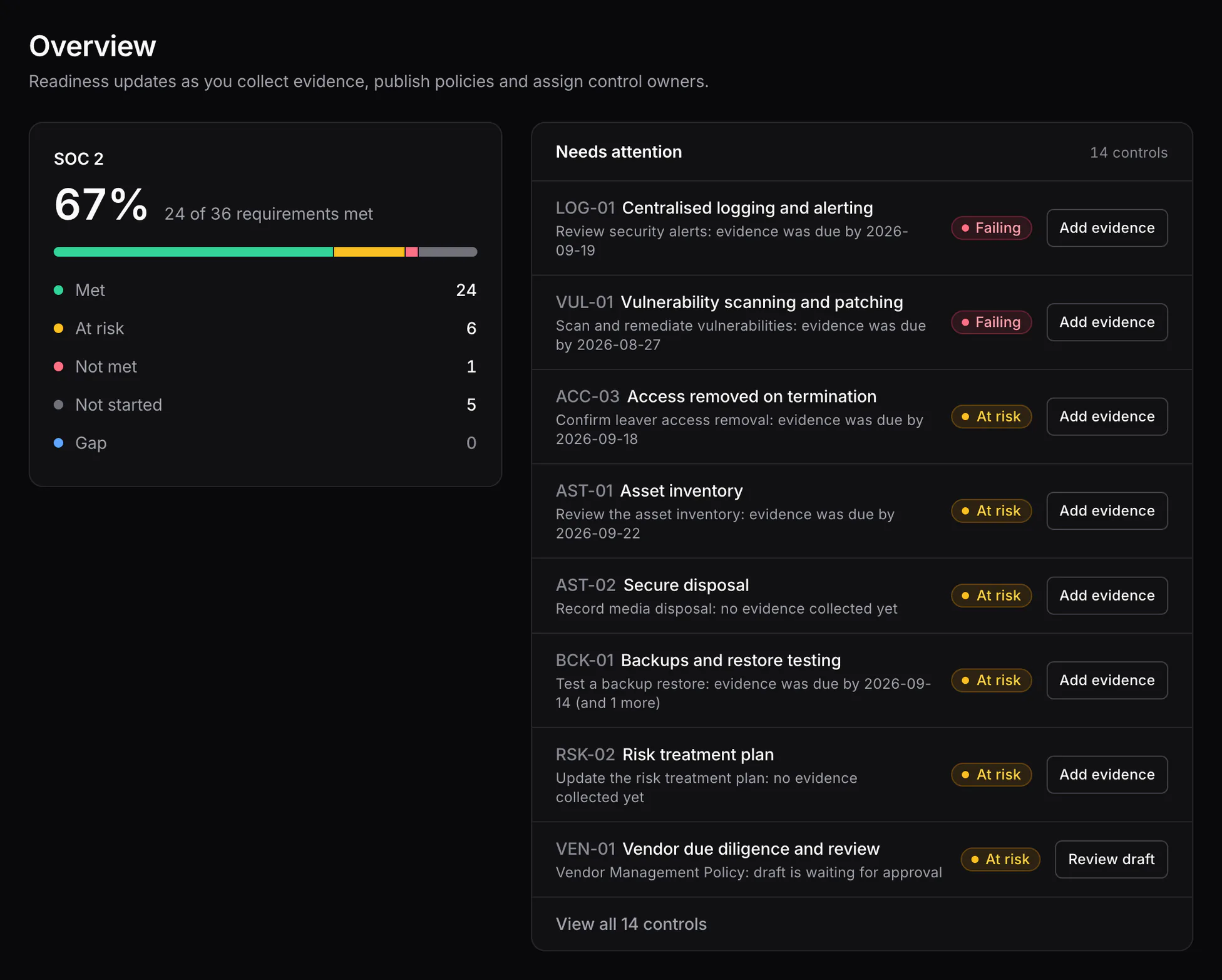
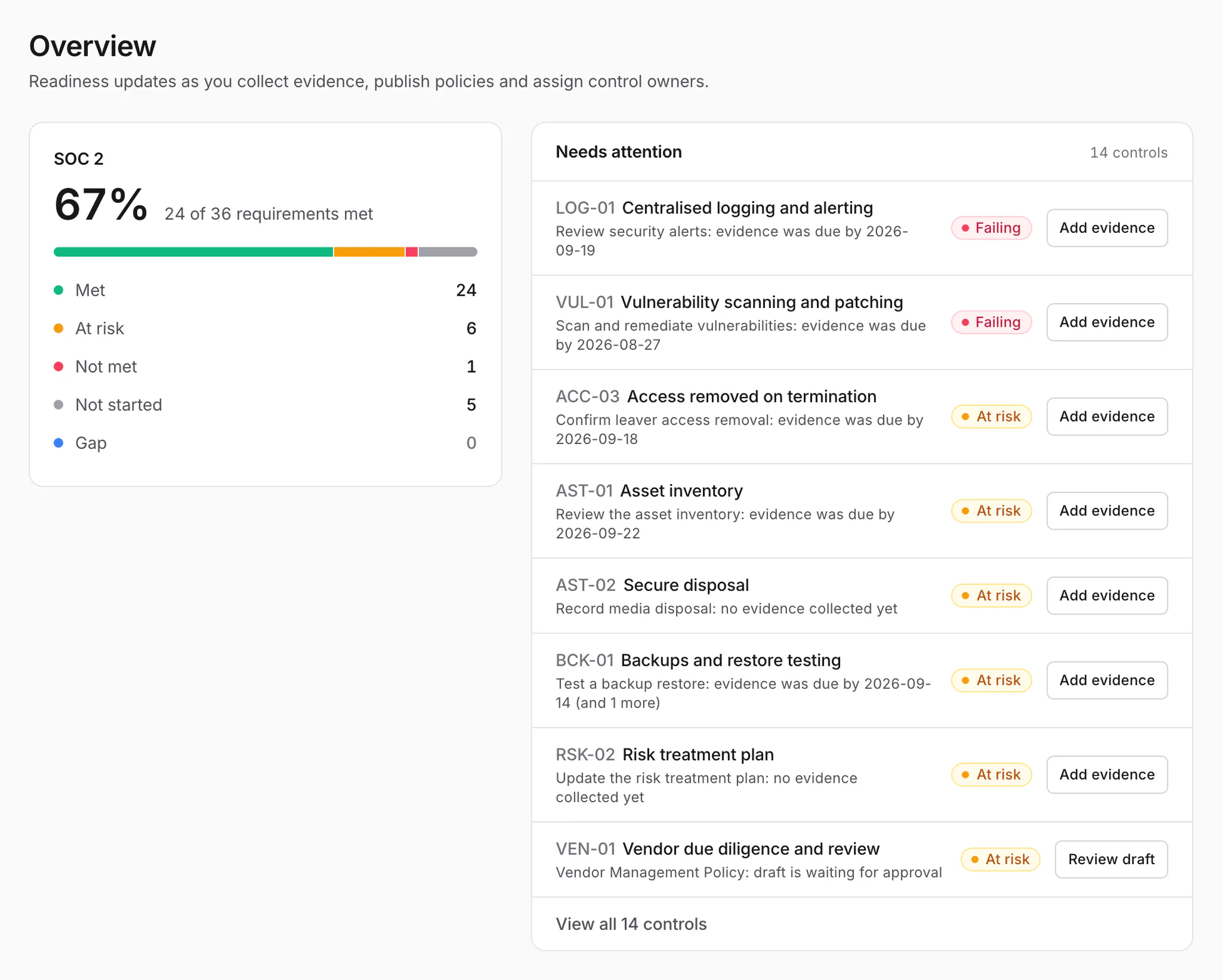
From the first piece of evidence
to a reviewer reading your policies.
- 01
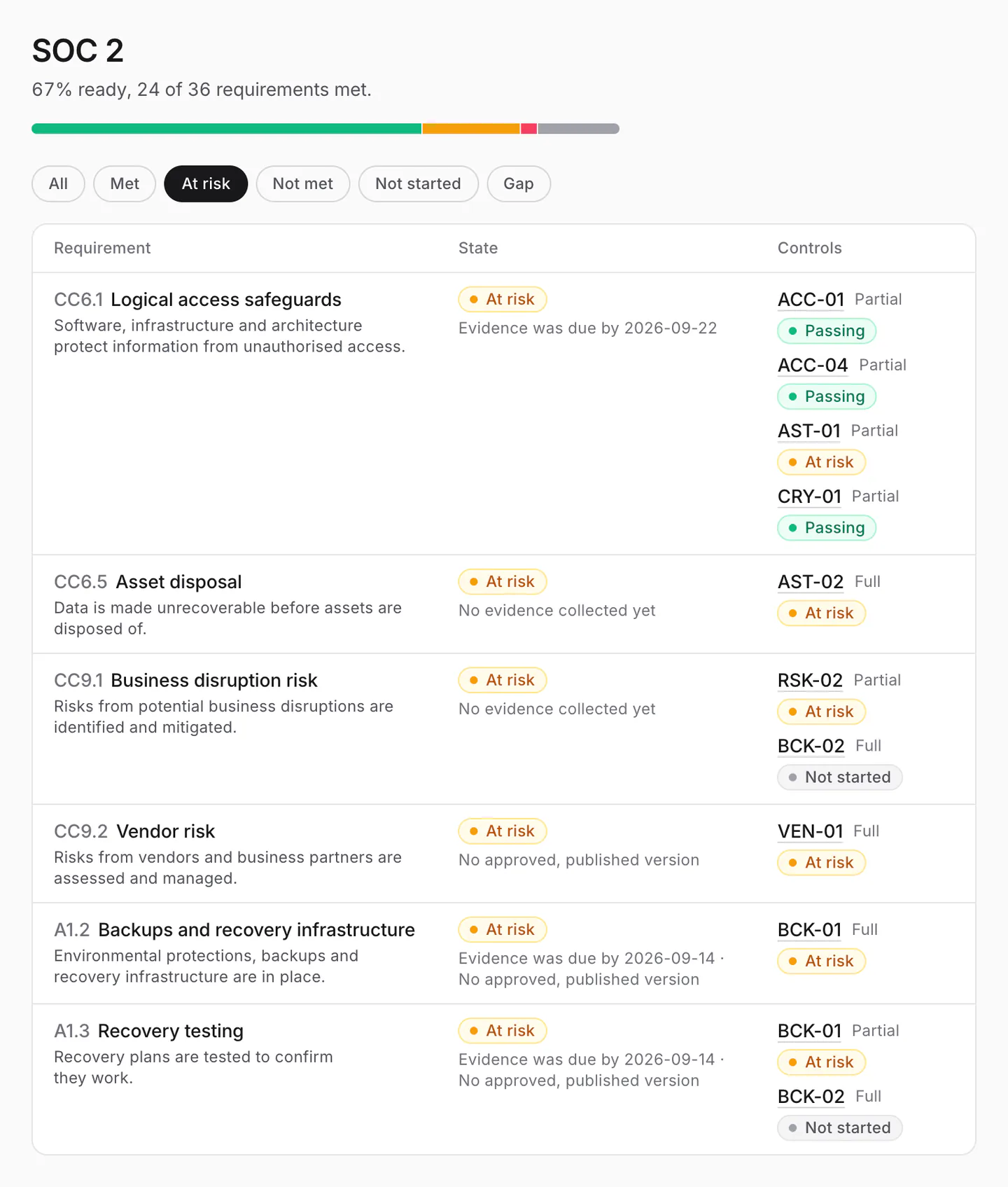
Every status comes with its reason
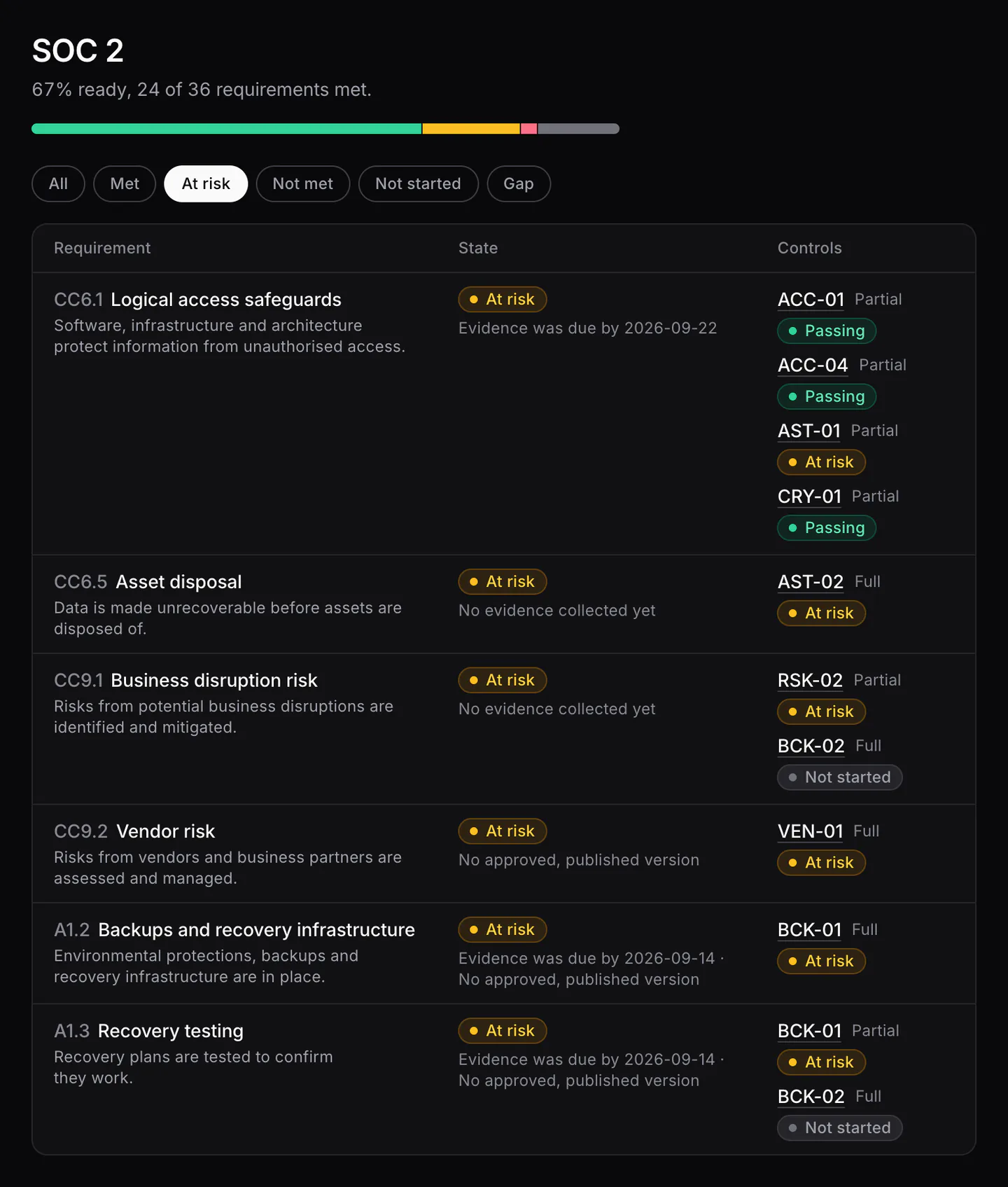
A requirement at risk shows the date that slipped and the control behind it. Nobody types a status in.
- 02
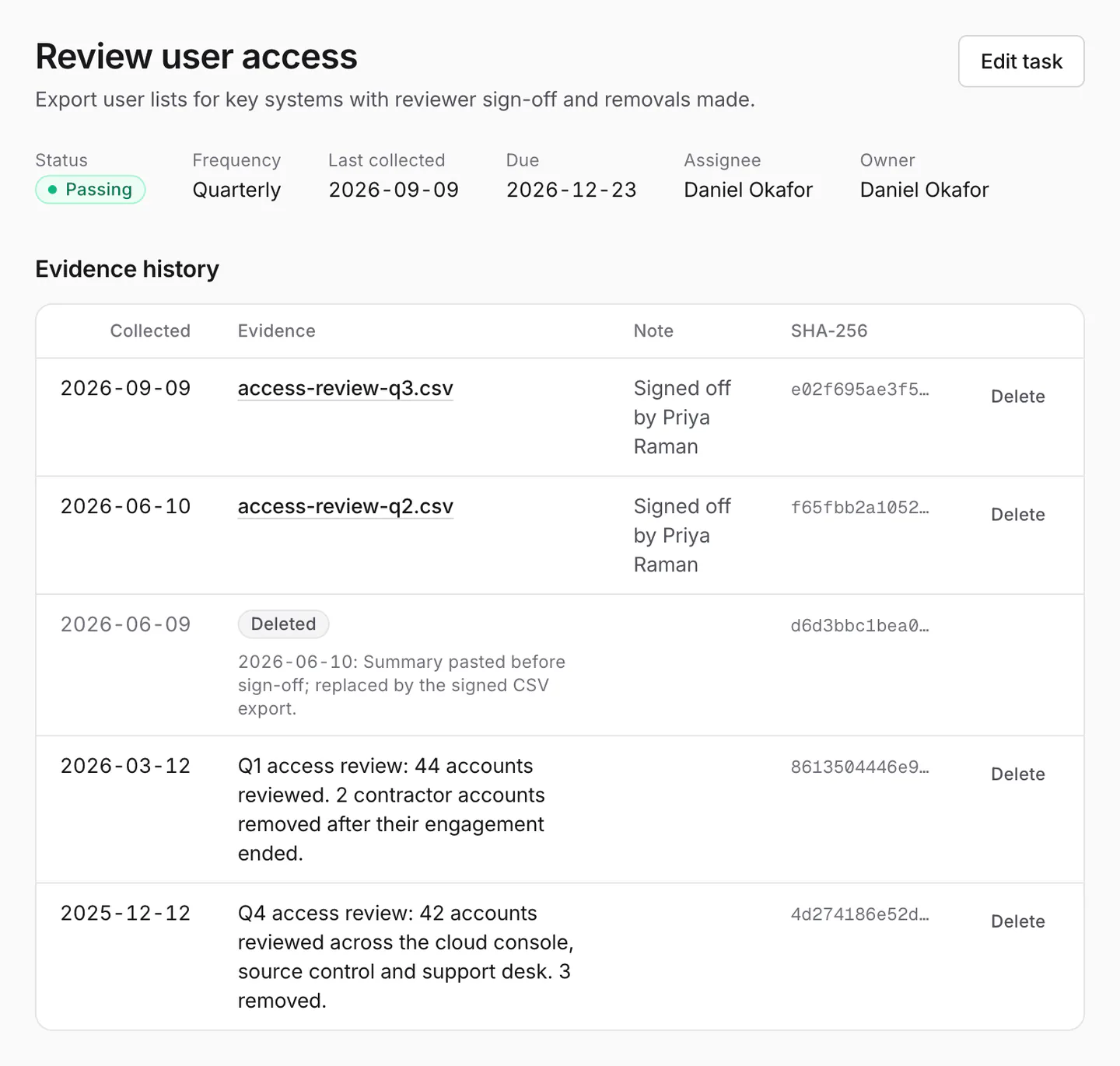
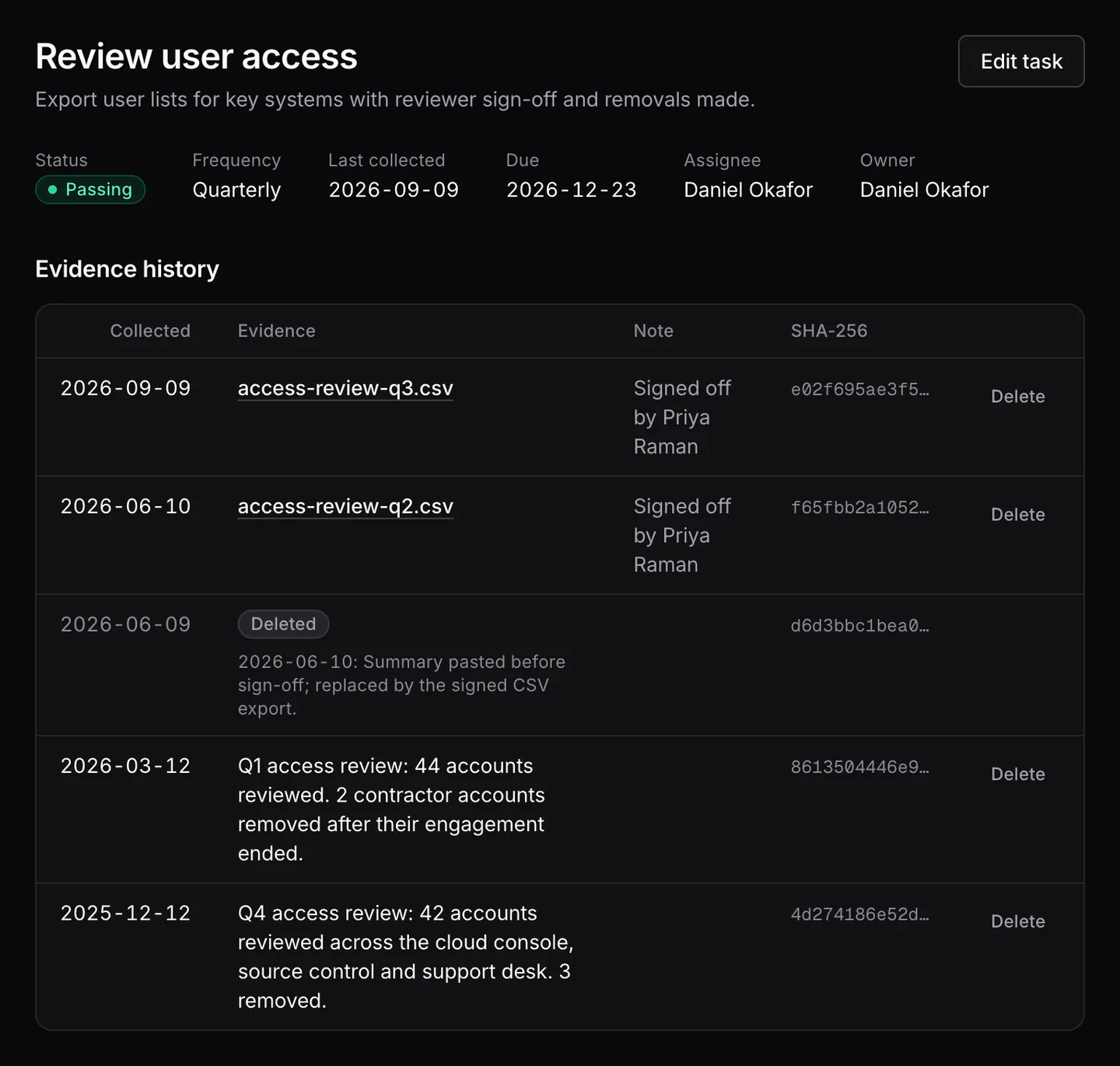
Evidence can't be edited
Each file or note is fingerprinted with SHA-256 when it's added. Deleting one leaves a record with the reason.
- 03
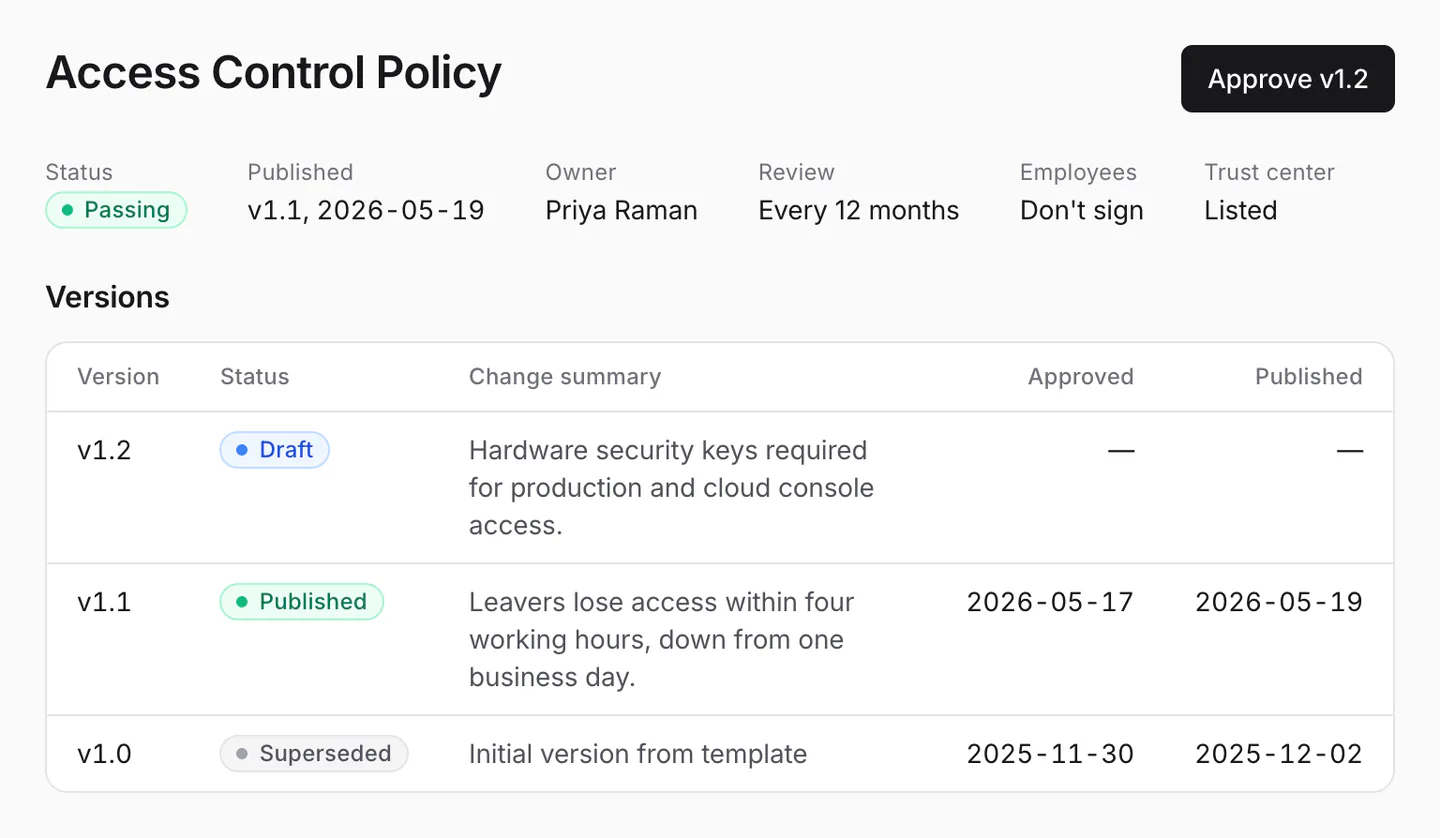
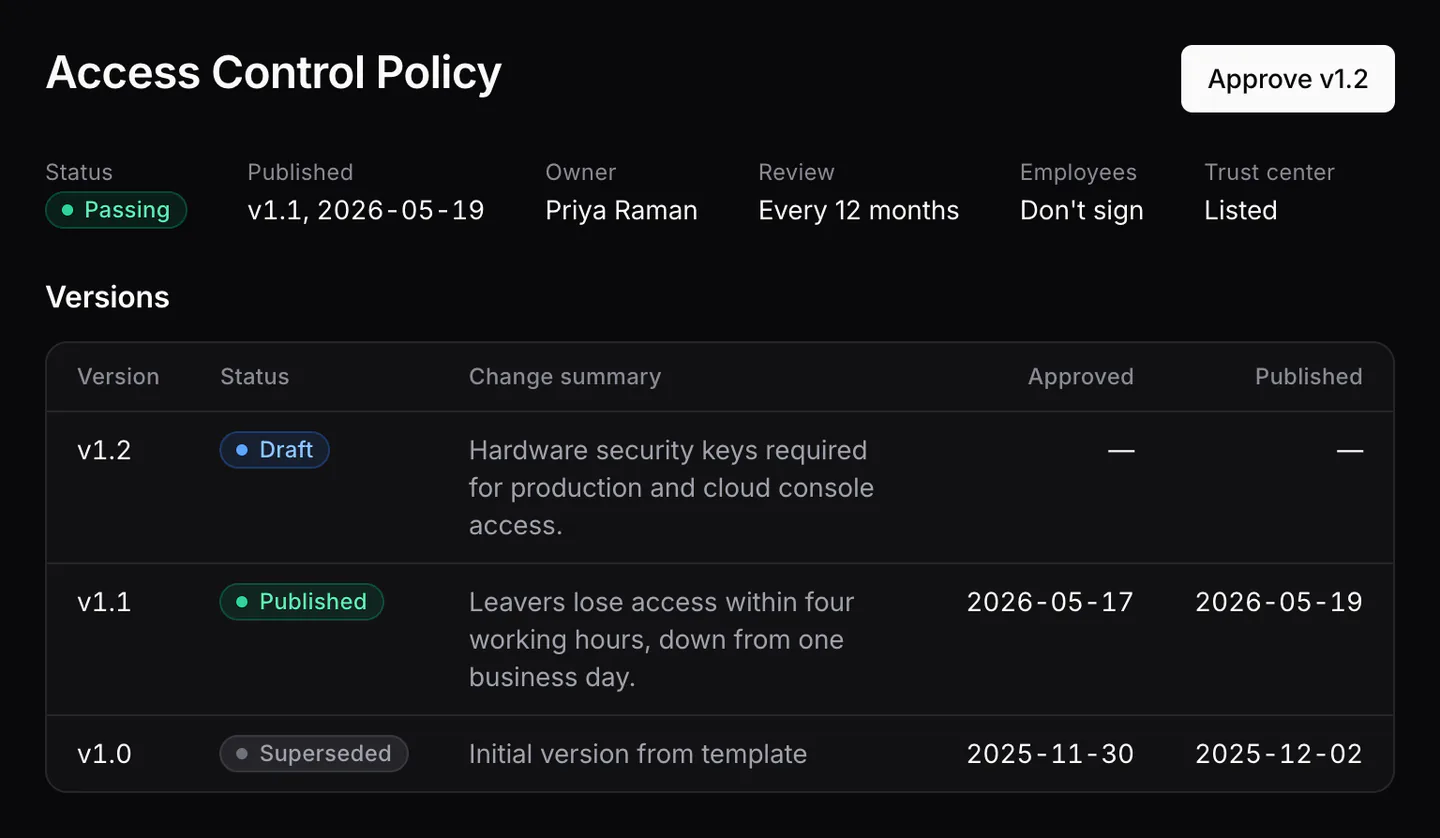
Someone other than the author approves each policy
Every change is a new version. It counts once it's approved and published, and goes at risk when its review date passes.
- 04
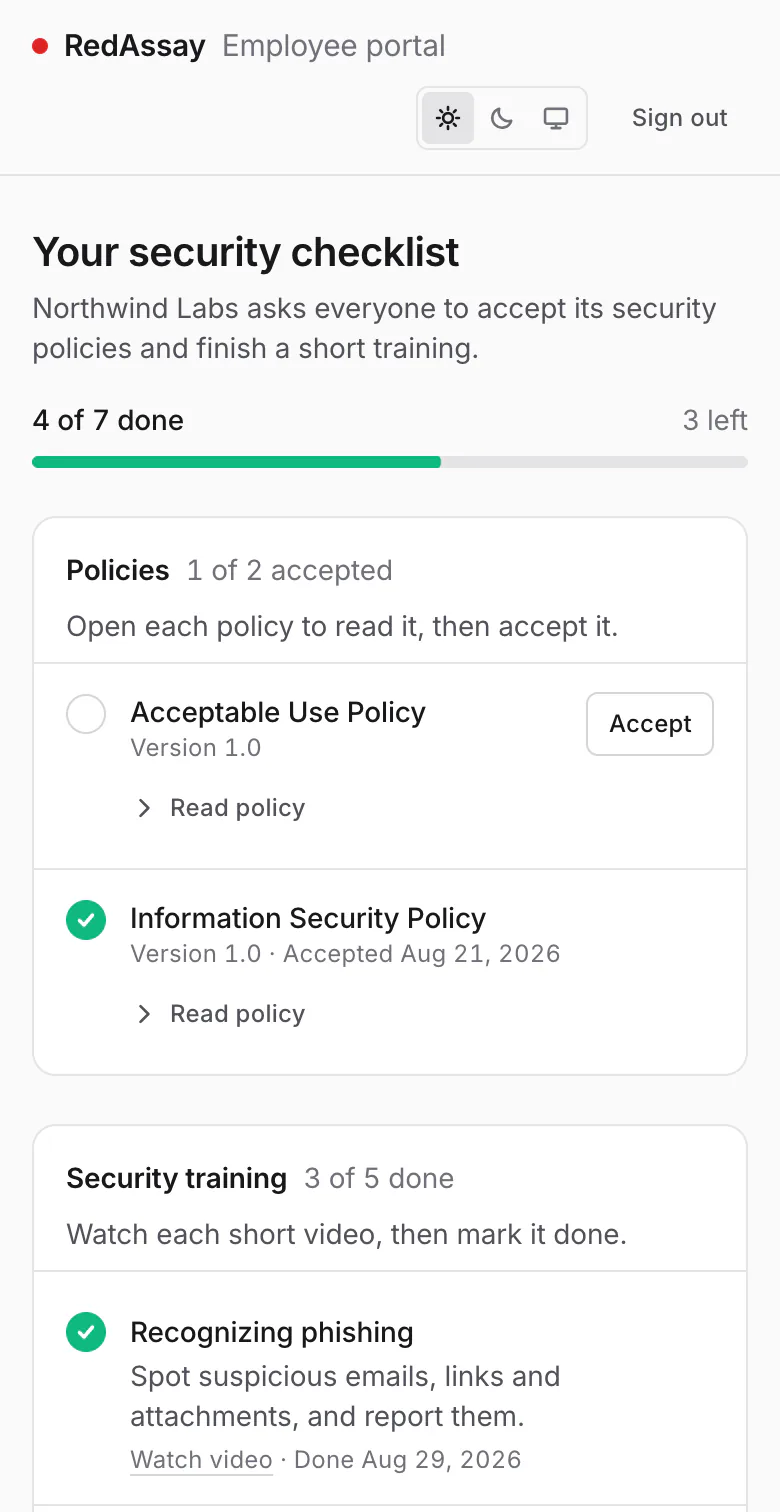
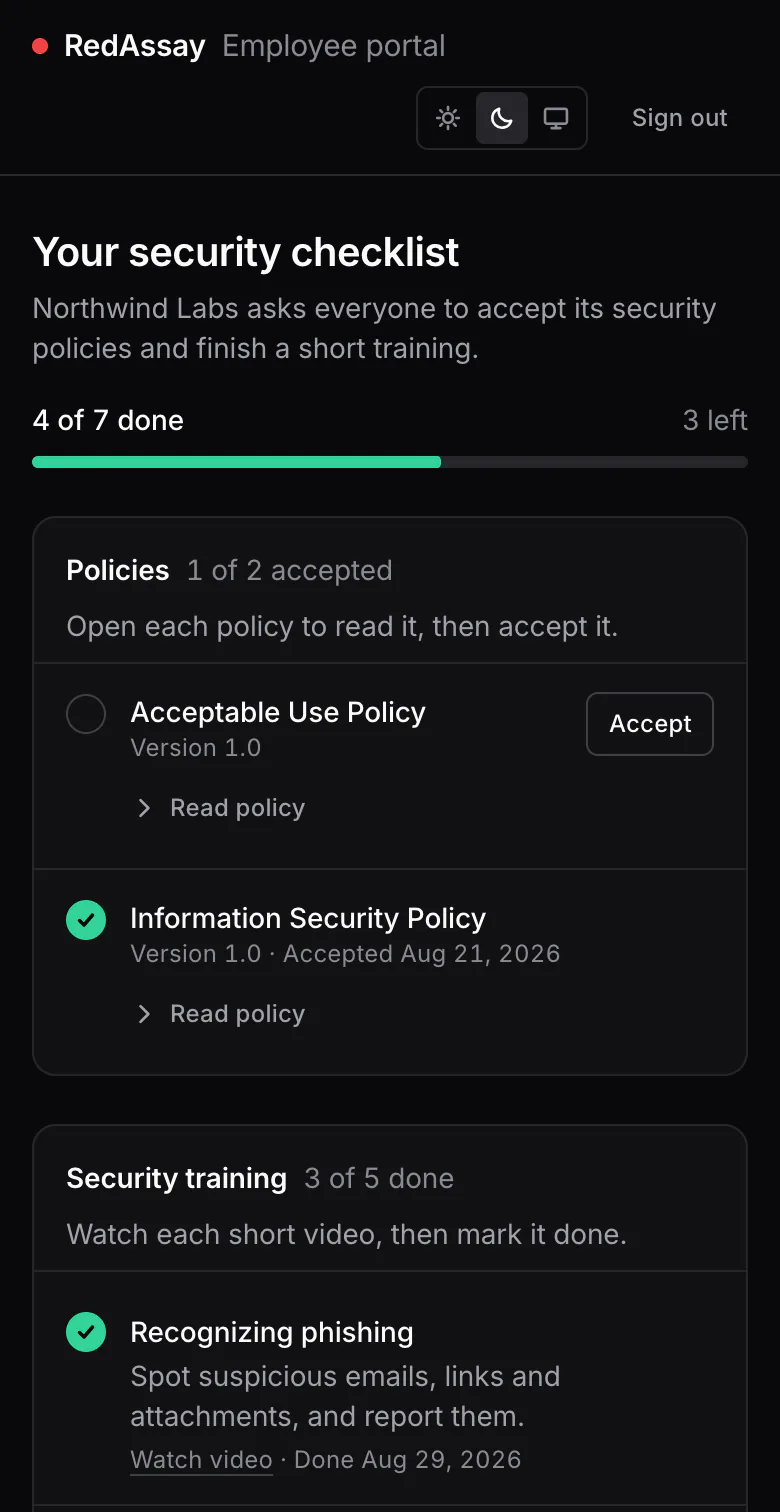
Staff sign off from their phone
Employees accept each policy version and finish five short training items. You see who hasn't.
- 05
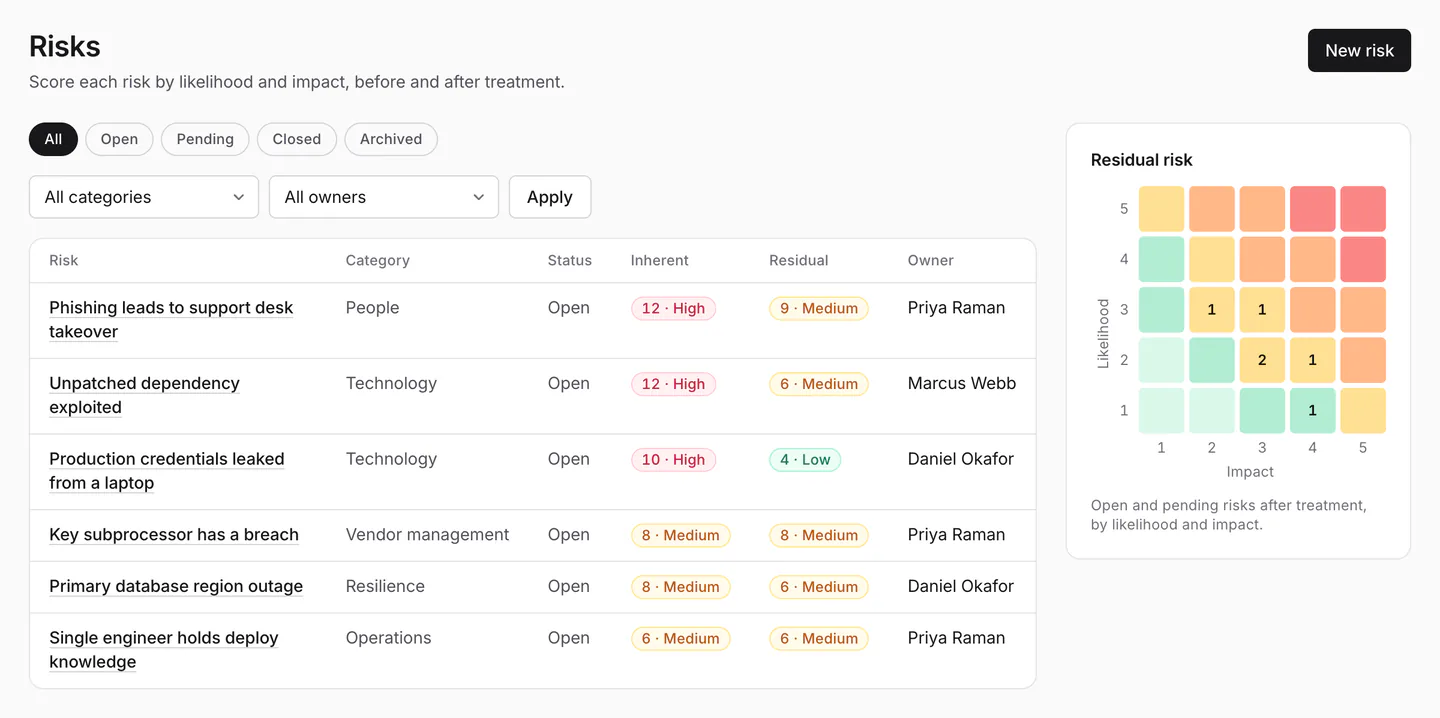
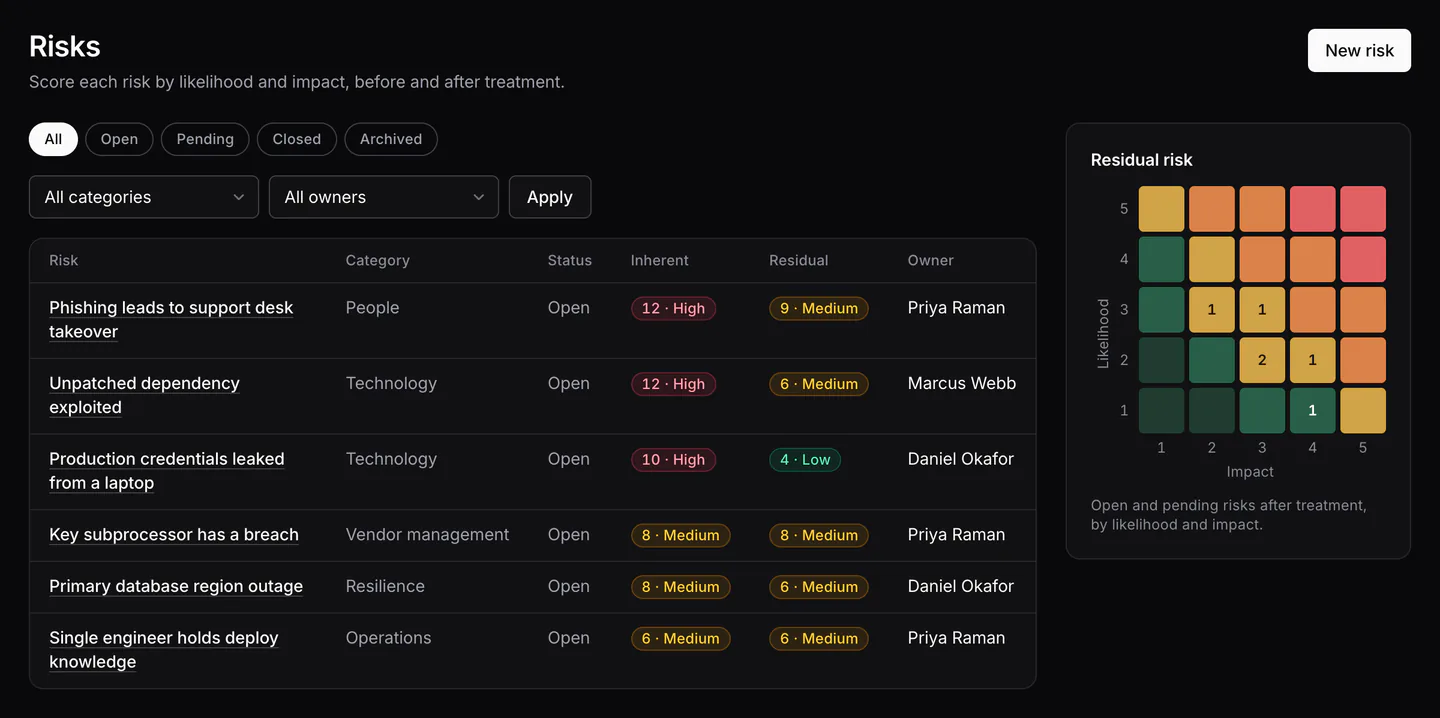
Risks scored before and after treatment
Likelihood by impact on a 5×5 matrix, with an owner, a treatment decision and the tasks that reduce each risk.
- 06
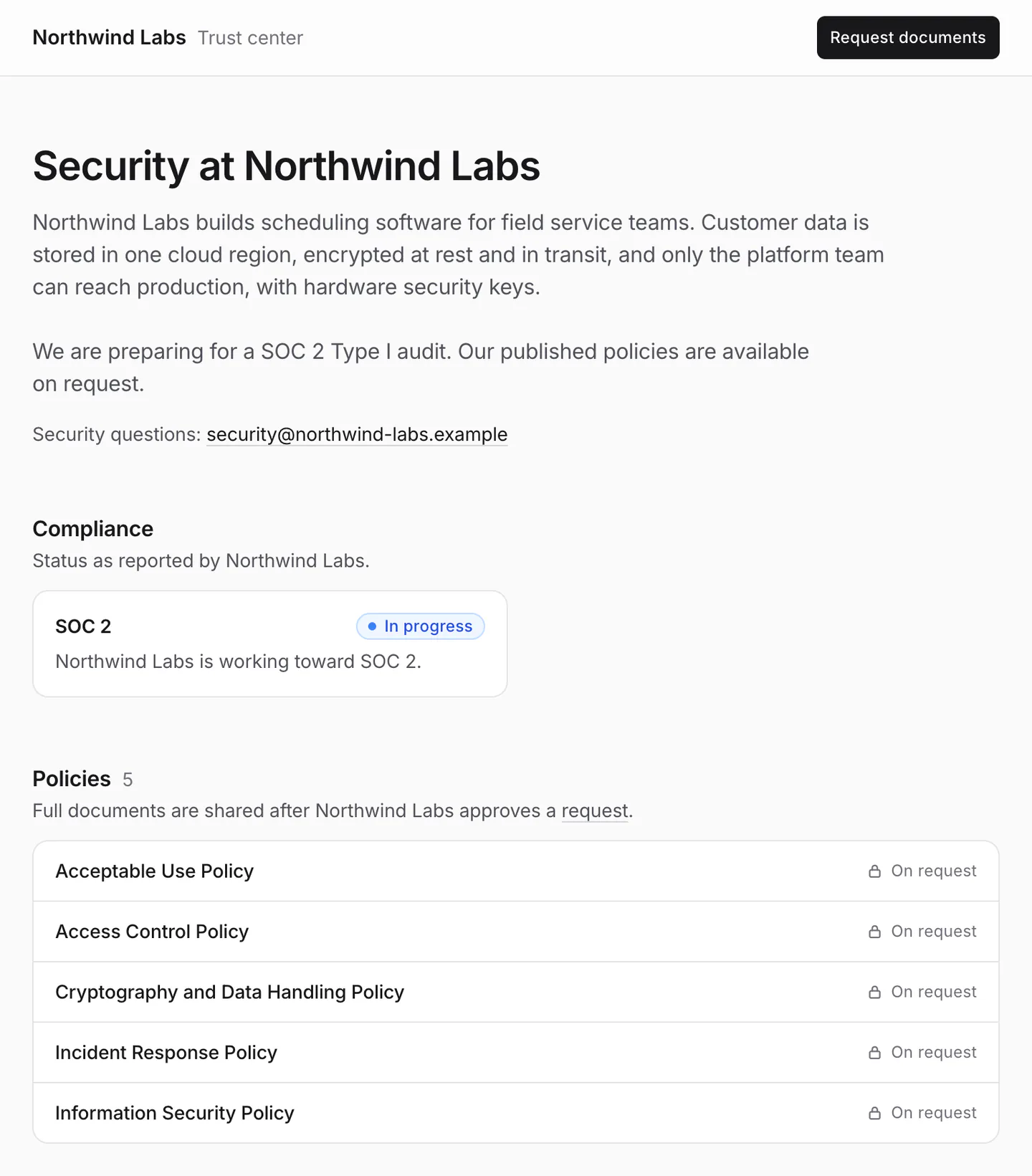
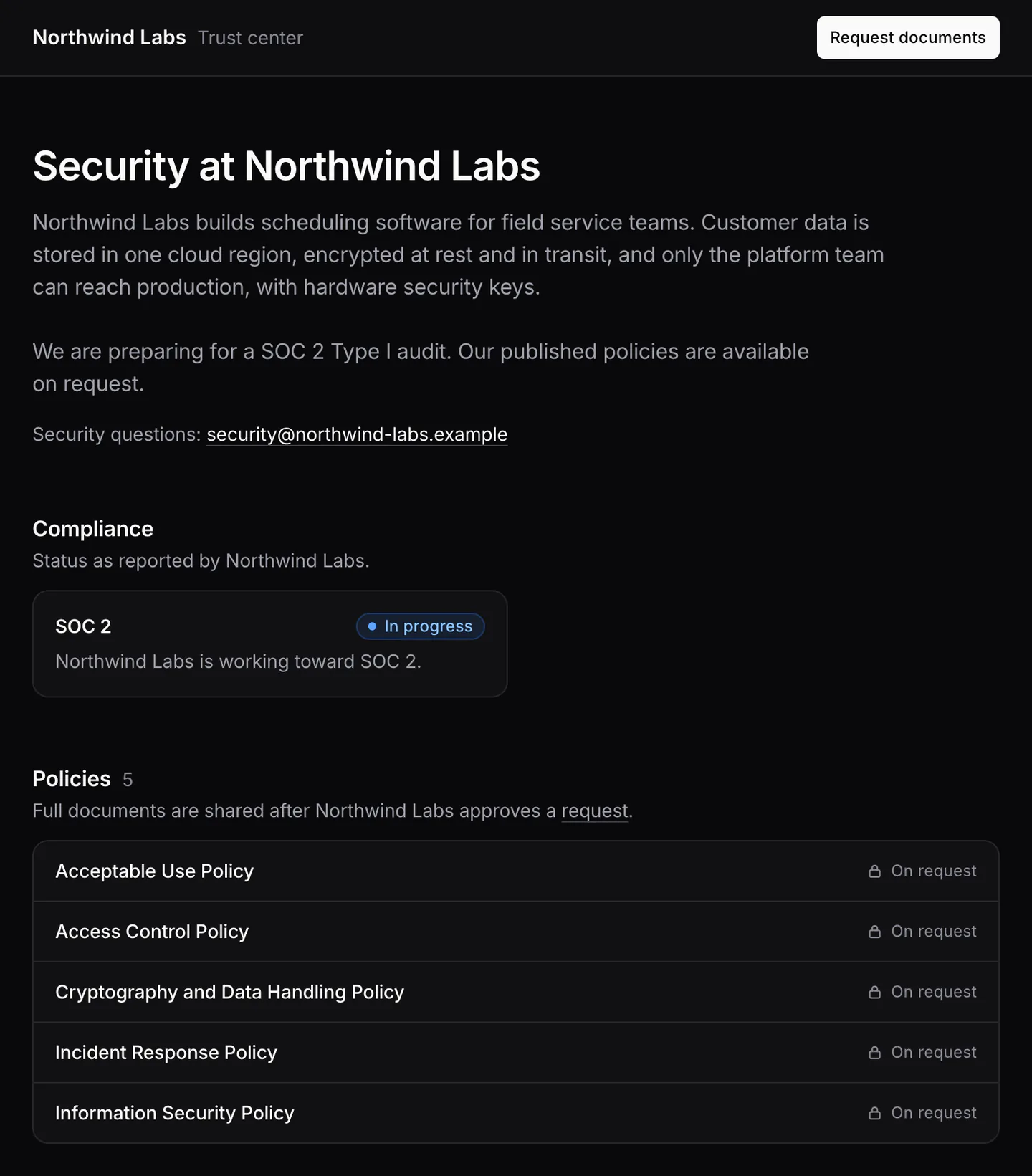
A trust center for your customers' reviewers
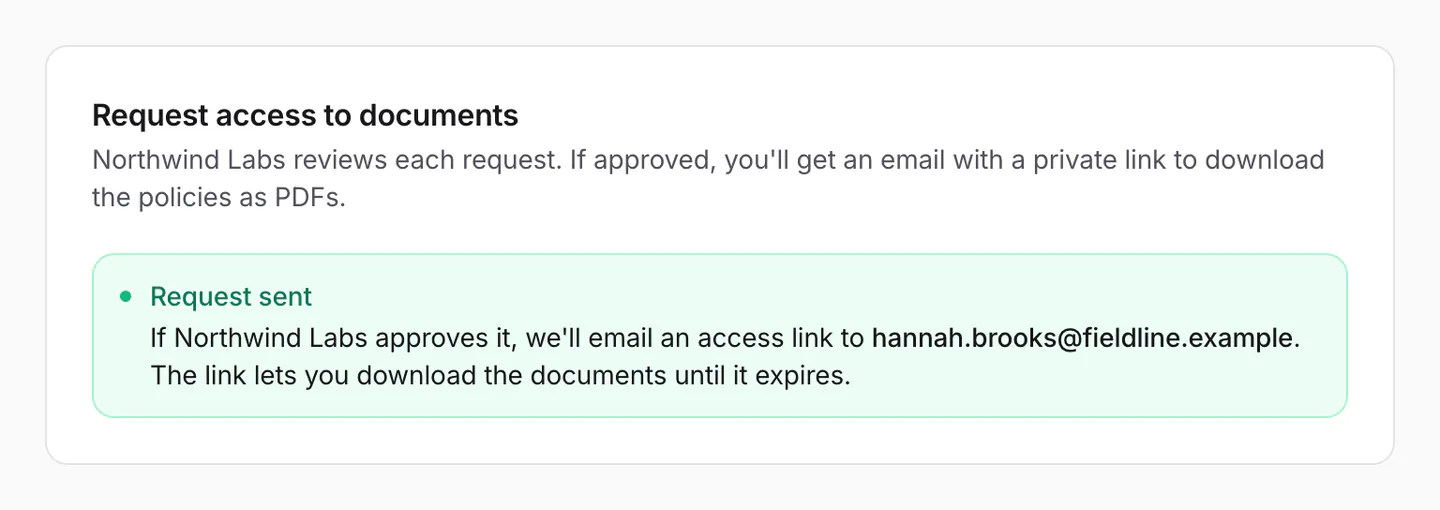
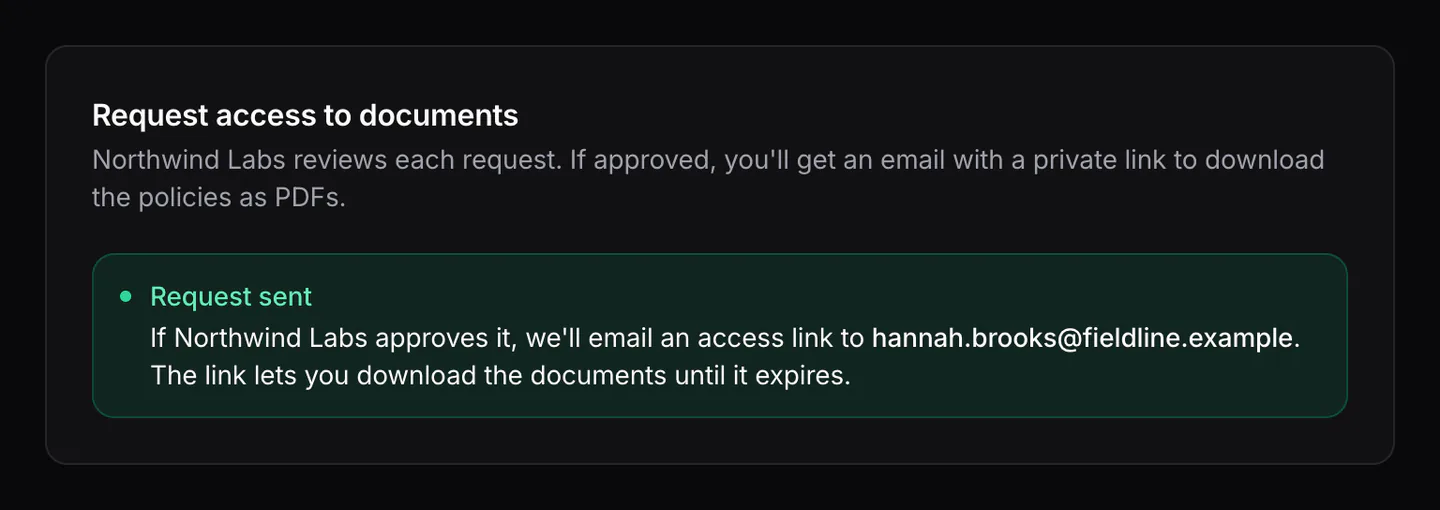
Show your framework status and which policies you have. Reviewers ask for the documents, and you approve access for a set number of days.
Click through it
before you book anything.
The demo is the admin app with a made-up company. It runs in your browser, with no sign-up.
What it doesn't do
So you know before the call, not after.
- 01
It doesn't certify you. The SOC 2 report or ISO 27001 certificate still comes from an independent auditor. RedAssay gets you ready for that audit and keeps you ready after it.
- 02
It doesn't connect to your cloud accounts or scan infrastructure. Your team adds evidence by upload or note, and RedAssay tracks when each piece goes stale.
- 03
It doesn't test your application. RedAssay's first product does that: an AI pentest agent, run as a service. Read about it at redassay.com.
Start with a call.
We set it up with you.
We go through which frameworks you need, who will own the work, and what you already have.
cal.com/redassay/attest
What happens after you book
- 01
The call. We agree your frameworks and owners, and note what you already have.
- 02
Your setup link. A one-time link by email. It creates one organization and expires if unused.
- 03
Your first day. Pick your frameworks. RedAssay creates controls, evidence tasks and policy drafts.